

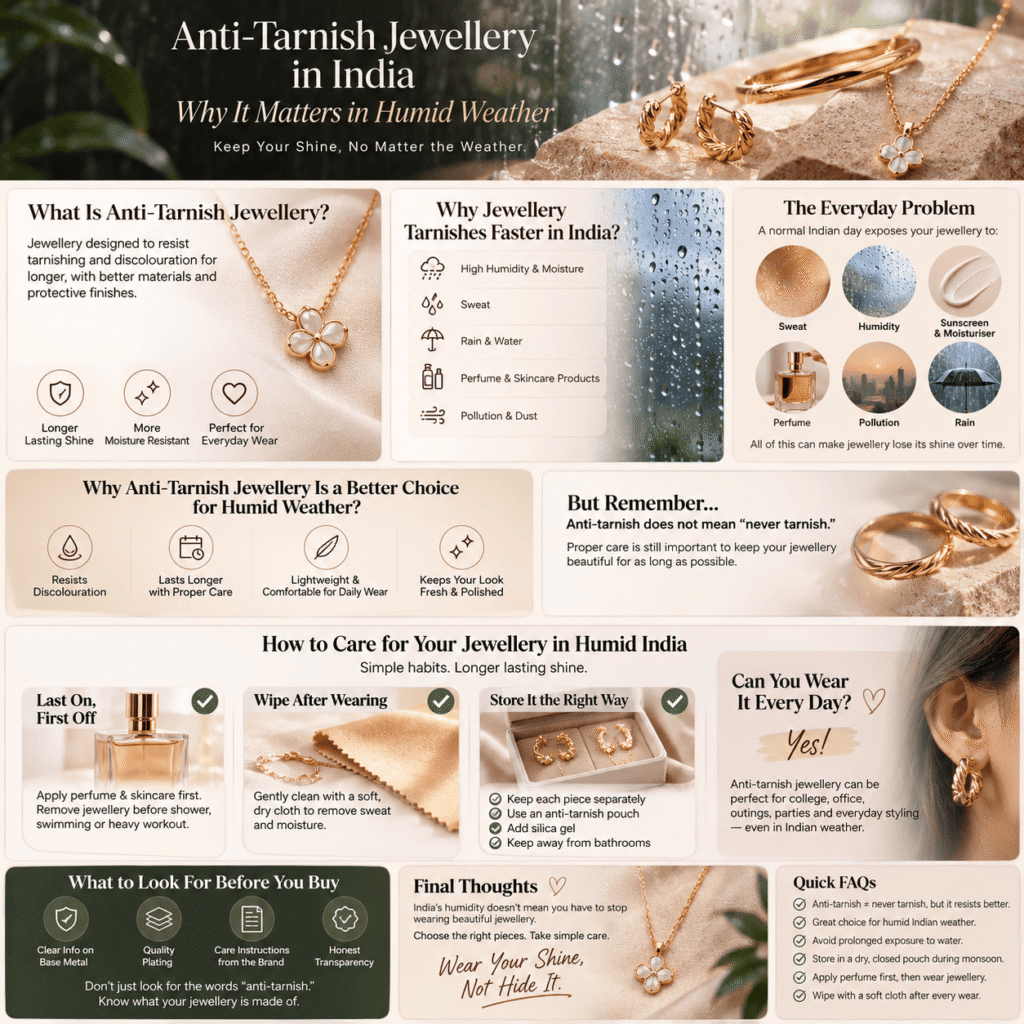
From humid summers to monsoon rains, sweat, moisture and everyday exposure can gradually make jewellery lose its shine. A necklace that looked beautiful when you bought it can start looking dull after regular use.
This is where anti-tarnish jewellery has become increasingly popular in India.
But what exactly is anti-tarnish jewellery? How does humidity affect jewellery? And how can you keep your favourite pieces looking beautiful for longer?
Let’s find out.
What Is Anti-Tarnish Jewellery?
Anti-tarnish jewellery is jewellery designed or finished in a way that helps reduce the effects of tarnishing, discolouration and oxidation.
Depending on the product, this can involve the choice of base metal, protective coatings, plating or specialised finishes.
However, it is important to understand that “anti-tarnish” does not necessarily mean “impossible to tarnish.” Jewellery can still be affected by prolonged exposure to moisture, sweat, chemicals, friction and improper storage.
The quality of the material and the way you care for the jewellery both make a difference.
Why Does Jewellery Tarnish Faster in India?
India has a wide range of climates, but many parts of the country experience significant heat and humidity, particularly during the monsoon.
Humidity means there is more moisture in the surrounding air. When jewellery is also exposed to sweat, skincare products, perfume and other everyday substances, the surface can gradually lose its original shine.
Silver, for example, can react with sulphur compounds in the environment and develop a darker surface layer. Humidity can make this process happen faster.
For someone wearing jewellery every day, especially during hot and humid weather, this can become frustrating.
Humidity, Sweat and Jewellery: The Everyday Indian Problem
Think about a normal summer day.
You leave home in the morning, travel to college or work, spend time outside, commute through traffic and eventually return home after several hours.
During this time, your jewellery may come into contact with:
- Sweat
- Humid air
- Rain or water
- Sunscreen
- Moisturiser
- Perfume
- Hair products
- Pollution
- Dust
This repeated exposure can affect the appearance and finish of jewellery over time.
That is why jewellery care in India needs to be slightly different from jewellery care in a dry climate.
Is Anti-Tarnish Jewellery Better for Humid Weather?
For people who want jewellery for regular everyday use, anti-tarnish finishes and more moisture-resistant materials can be a practical choice.
Stainless steel, for example, is widely used in jewellery because it is more resistant to rust and oxidation than many traditional fashion-jewellery base metals.
However, the exact durability depends on the material, construction and finish of the individual piece.
This is why it is worth checking what a jewellery piece is actually made from rather than relying only on the words “anti-tarnish” or “waterproof.”
Anti-Tarnish Does Not Mean You Can Ignore Jewellery Care
One of the biggest misconceptions about anti-tarnish jewellery is that it requires absolutely no maintenance.
Even durable jewellery benefits from proper care.
If you want your jewellery to stay beautiful for as long as possible, follow a simple rule:
Keep moisture and chemicals away whenever possible.
Before wearing your jewellery, allow your perfume, moisturiser and other skincare products to settle first.
When you return home, remove your jewellery and gently wipe it with a soft, dry cloth.
This small habit can help remove sweat and moisture from the surface before you store the piece.
How to Store Jewellery During India’s Humid Months
Storage is particularly important during the monsoon.
Leaving jewellery exposed on an open dressing table allows it to remain in contact with humid air for long periods.
Instead:
1. Store each piece separately
Keeping necklaces, rings and earrings separated helps reduce scratches and friction.
2. Use an anti-tarnish pouch
A closed pouch provides better protection than leaving jewellery exposed.
3. Add silica gel
A small silica-gel packet inside your jewellery storage area can help manage excess moisture.
4. Keep jewellery away from bathrooms
Bathrooms contain significant moisture and steam, making them a poor place to store jewellery.
5. Make sure jewellery is completely dry
Never store a piece while it is still wet or covered with sweat.
The “Last On, First Off” Rule
One of the easiest jewellery habits to remember is:
Jewellery should be the last thing you put on and the first thing you take off.
Apply skincare, sunscreen, perfume and other products first.
Then wear your jewellery.
When you return home, remove the jewellery before showering, swimming, exercising or doing activities that involve excessive water or sweat.
This is particularly useful for plated jewellery because water, chemicals and friction can gradually affect the plating.
Can You Wear Anti-Tarnish Jewellery Every Day?
Yes, many anti-tarnish jewellery pieces are designed with everyday wear in mind.
They can be perfect for:
- College
- Office
- Casual outings
- Brunches
- Parties
- Dinner dates
- Festivals
- Everyday styling
The key is choosing jewellery made from suitable materials and taking reasonable care of it.
For humid Indian weather, lightweight and durable jewellery can be particularly convenient because you don’t have to reserve your favourite pieces only for special occasions.
What Should You Look For When Buying Anti-Tarnish Jewellery?
Before purchasing jewellery online, don’t just look at the words “anti-tarnish.”
Look for information about:
1. Base Metal
Check whether the brand clearly states what the jewellery is made from.
Stainless steel, sterling silver and other specified materials are more informative than a vague description such as “premium alloy.”
2. Plating
If the jewellery is plated, check what type of plating has been used.
The durability of a plated piece depends on factors including the underlying material, plating quality, thickness and everyday wear.
3. Care Instructions
A trustworthy jewellery brand should clearly explain how its pieces should be cared for.
4. Product Transparency
Look for brands that clearly explain their materials and finishes instead of making unrealistic claims.
Anti-Tarnish Jewellery for the Indian Lifestyle
Jewellery isn’t meant to sit inside a box forever.
We wear our favourite earrings to college. We style necklaces with Indian outfits. We layer bracelets for brunch. We wear rings to parties and festivals.
And India’s weather can be challenging for jewellery.
That is exactly why choosing jewellery designed with everyday wear and Indian conditions in mind can make a real difference.
Anti-tarnish jewellery can offer a convenient balance between style, durability and everyday practicality.
But remember: even the best jewellery benefits from simple care.
Final Thoughts
India’s humidity doesn’t mean you have to stop wearing beautiful jewellery.
The right material, a good finish and proper storage can help your jewellery maintain its appearance for much longer.
If you live in a humid city or regularly deal with hot summers and monsoon weather, consider jewellery that is designed with tarnish resistance in mind.
And once you’ve found your favourite pieces, remember the basics:
Keep them dry.
Keep them away from chemicals.
Wipe them after wearing.
Store them properly.
Because beautiful jewellery deserves to be worn—not hidden away.
Frequently Asked Questions
Does anti-tarnish jewellery never tarnish?
No. “Anti-tarnish” generally means the jewellery is designed to resist tarnishing or discolouration better than conventional pieces. However, prolonged exposure to moisture, sweat, chemicals and friction can still affect jewellery over time.
Is anti-tarnish jewellery good for India’s humid weather?
It can be a practical choice, particularly for people who want jewellery for regular wear. However, durability depends on the material, plating and construction of the individual piece.
Can I wear anti-tarnish jewellery in the rain?
Light exposure to rain may not immediately damage many jewellery pieces, but prolonged exposure to water is best avoided. Always dry your jewellery thoroughly before storing it.
How should I store jewellery during the monsoon?
Keep jewellery in a dry, closed pouch or jewellery box. Store pieces separately and consider using silica gel to help control moisture.
Does perfume damage jewellery?
Perfumes, lotions and other cosmetic products can contribute to dullness or damage, particularly with plated jewellery. Applying these products before putting on jewellery is a safer habit.
What is the best habit for keeping jewellery shiny?
Simply wipe your jewellery with a soft, dry cloth after wearing it and store it somewhere dry. This removes sweat and moisture before the jewellery goes into storage.
